
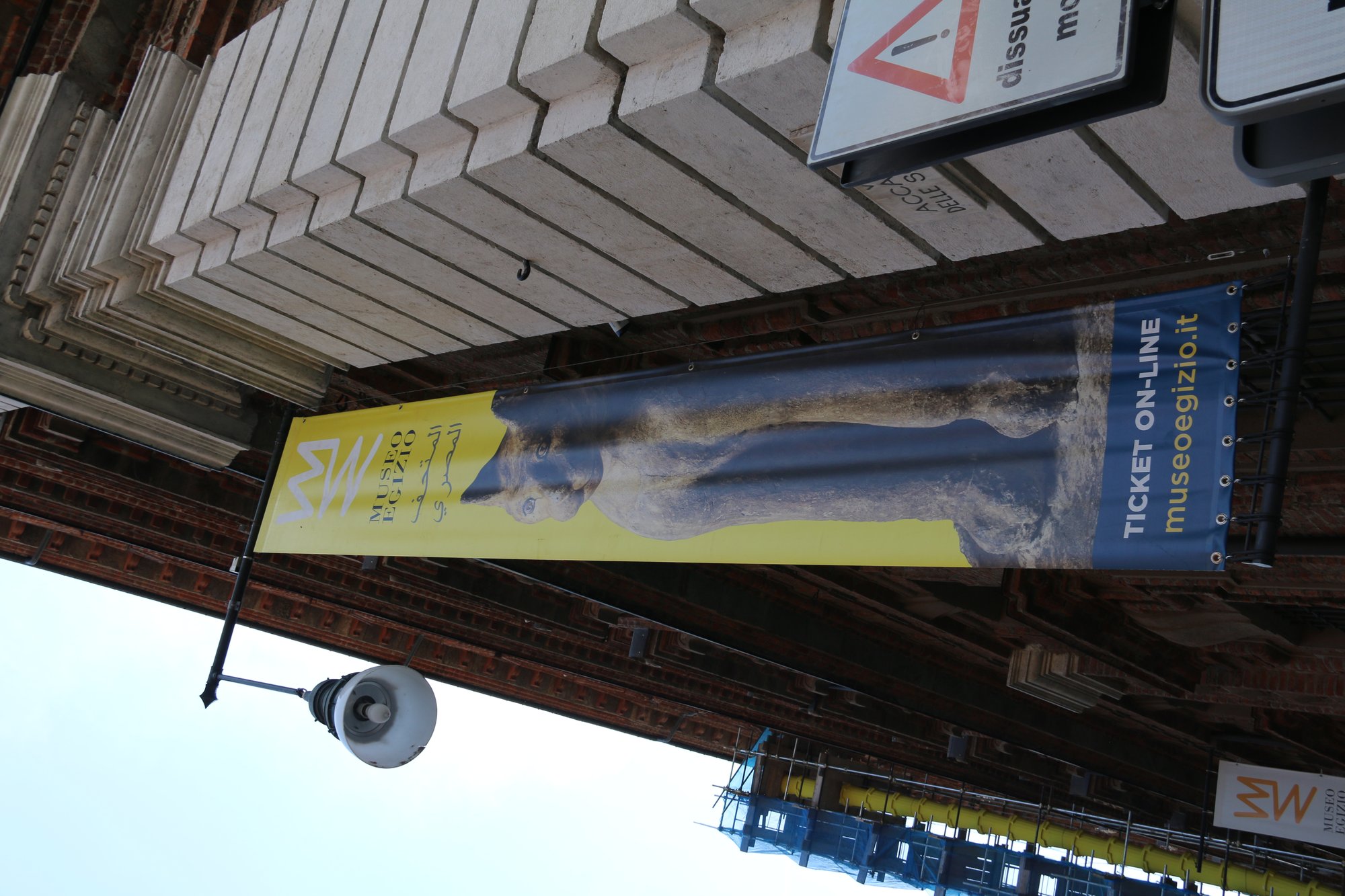
Egyptian Museum (Museo Egizio)
- museum
- Price: €15 - €18
- Opening hours: Tue-Sun 09:00 - 18:30 (Tue from 09:00, last entry 17:30); closed Mon
History
The museum's core collection arrived in Turin in 1824, when King Carlo Felice of Savoy purchased more than 8,000 Egyptian artefacts assembled by Bernardino Drovetti, a Piedmontese who had served as Napoleon's consul general in Egypt and used the position to build one of the great private antiquities collections of his age. When the museum opened its doors the following year, it became the first institution anywhere in the world dedicated solely to the civilisation of ancient Egypt, predating Cairo's own Egyptian Museum by decades.
The collection kept growing through the 19th and early 20th centuries, most significantly under archaeologist Ernesto Schiaparelli, who directed excavations in Egypt on Italy's behalf and shipped a steady stream of new discoveries back to Turin. Combined with later acquisitions and continued excavation partnerships, the museum's holdings grew to more than 40,000 objects spanning some 5,000 years of history, ranking it second only to Cairo as the most important collection of Egyptian antiquities anywhere in the world.
The Tomb of Kha and Merit
Among Schiaparelli's discoveries, one stands apart. In 1906, at Deir el-Medina, his team uncovered the burial chamber of the architect Kha and his wife Merit, sealed and untouched since roughly 1400 BC. Almost every tomb of that age known to archaeology had already been broken into and stripped by looters within decades or centuries of burial; finding one still sealed, more than three thousand years later, is exceptionally rare.
Because nothing had ever been disturbed, the tomb preserved an intimate, complete picture of everyday life rather than just royal splendour: furniture, cosmetics, jewellery, folded linen and sealed jars of food, all arranged just as the couple's family had left them. The museum displays the find largely as it was excavated, and it remains one of the most quietly moving rooms in the building — a private household from three and a half thousand years ago, frozen in place.
Did you know?
The museum's dramatic 2015 renovation entirely reorganised the visitor route, arranging the galleries chronologically across four underground and above-ground floors inside the historic Collegio dei Nobili, so that walking through the museum now roughly follows a walk through Egyptian history itself, from prehistory to the Roman period.
The visit culminates in the Gallery of the Kings, a hall of monumental statues of pharaohs and deities that is itself something of a landmark within the museum. Oscar-winning production designer Dante Ferretti conceived it as a darkened, theatrical black box in 2006 for the Turin Winter Olympics; in 2024, for the museum's bicentenary, architecture firm OMA reimagined the room entirely, replacing the shadows with reflective walls and natural light that reveal the building's original 17th-century vaulted ceiling.
Good to know
The museum is closed on Mondays and draws heavy demand year-round, so pre-booking a timed-entry ticket online is strongly recommended, especially in summer and around Italian public holidays, to avoid long queues at the door. Give yourself at least two to three hours to do the collection justice, more if you want to read the extensive information panels in depth.
The museum sits right in the historic centre on Via Accademia delle Scienze, an easy walk from Piazza Castello, and pairs naturally with a stop nearby for coffee at one of Turin's historic 19th-century cafés, several of which are just steps from the entrance.