
Palazzo Carignano & Museum of the Risorgimento
- palace
- museum
- Price: €5 - €10
- Opening hours: Tue-Sun 09:00 - 18:30; closed Mon
Book a guided tour of Torino
Skip the line and see Torino with a local guide.
History
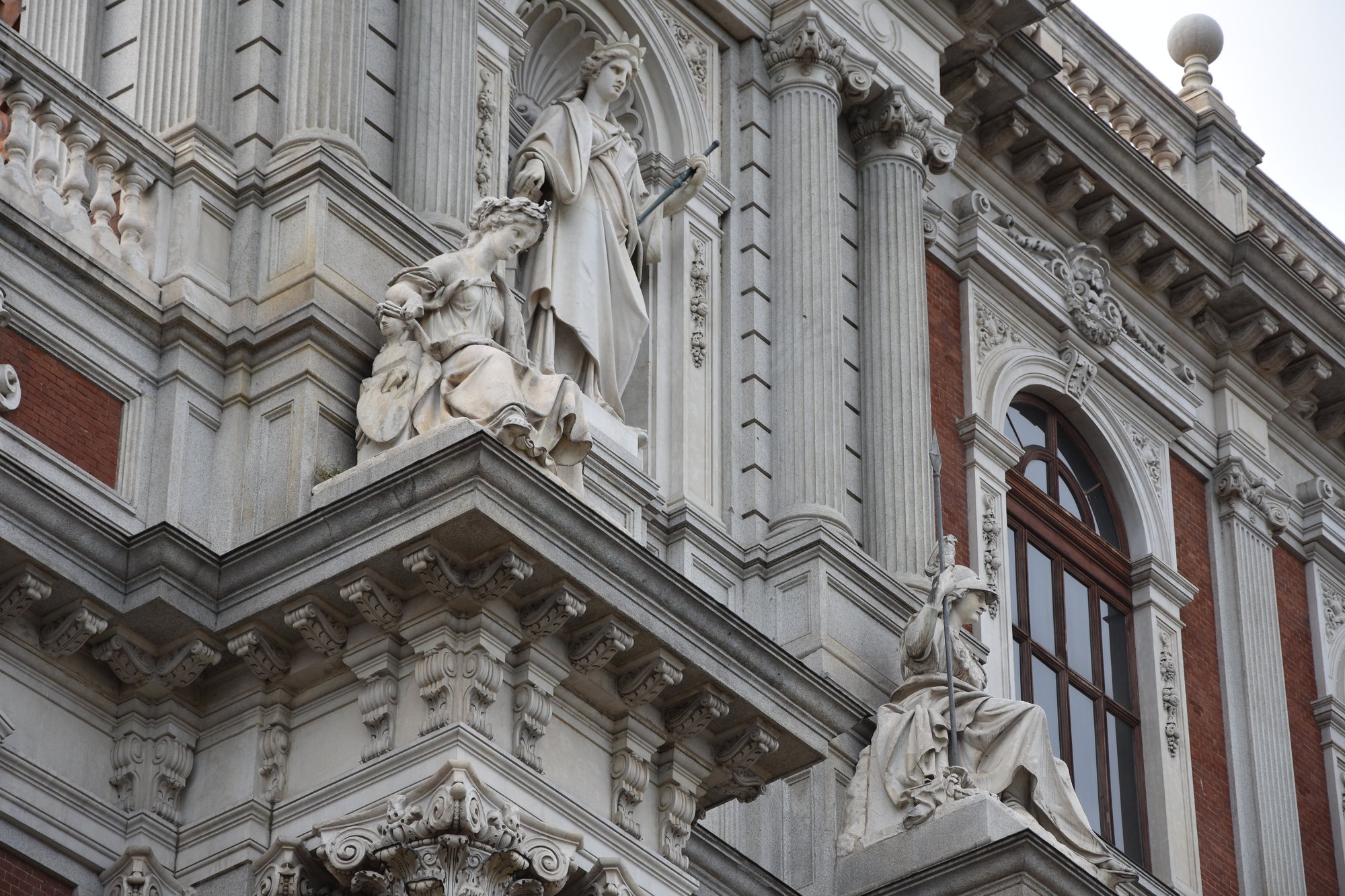
Built from 1679 for the Carignano branch of the House of Savoy, Palazzo Carignano stands apart from every other building in Turin thanks to its architect, Guarino Guarini, a Theatine friar who treated brick the way other Baroque masters treated stone. Rather than a flat, ordered facade, Guarini gave the palace a wall that ripples convincingly outward and back in a single continuous curve, built entirely in exposed terracotta brick and detailed with elaborate cornices — a look that owes more to central European Baroque than to anything else in Piedmont.
The palace's place in Italian history was cemented in 1820, when Vittorio Emanuele II was born within its walls. He would go on to become the first king of a unified Italy in 1861, closing a loop that had begun in the same rooms four decades earlier.
Birthplace of a nation
From 1861 to 1865, while Turin briefly served as capital of the newly unified kingdom, the palace's grand oval hall was fitted out as the debating chamber of the Chamber of Deputies — the lower house of Italy's first parliament. Statesmen who had spent decades working toward unification, Camillo Cavour among them, sat and argued policy for the new nation under that same curved ceiling before the capital, and the chamber, moved on to Florence and eventually Rome.
That history is now the subject of the National Museum of the Italian Risorgimento, housed inside the palace across some thirty rooms. Around 3,000 documents, paintings, uniforms and personal objects trace the story from the Napoleonic-era reforms that first stirred Italian national feeling, through the wars and uprisings of unification, to the founding of the republic in the 20th century — making the building both a monument to the Risorgimento and one of its central stages.
Did you know?
Guarini's curved brick facade was a radical choice for its time and place: brick was the cheaper, more workaday material in a city otherwise built up in stone and plaster, yet Guarini used it to pull off a feat of structural bravura that stone facades of the period rarely attempted. Architectural historians still cite it as one of the boldest civic Baroque facades in Italy.
Few buildings anywhere can claim to have both housed a country's first parliament and been the birthplace of that country's first king — Palazzo Carignano can claim both, within the same four walls and less than half a century apart.
Good to know
The palace is closed on Mondays, and admission is inexpensive compared with Turin's larger royal sites, making it an easy addition to a day spent around the historic centre. Give the Risorgimento museum more time than the building's compact footprint suggests — thirty rooms of material add up.
It's a natural stop for anyone curious about Italian unification, and pairs well with a walk through the surrounding streets of the centro storico, where much of that history unfolded within a few hundred metres.