
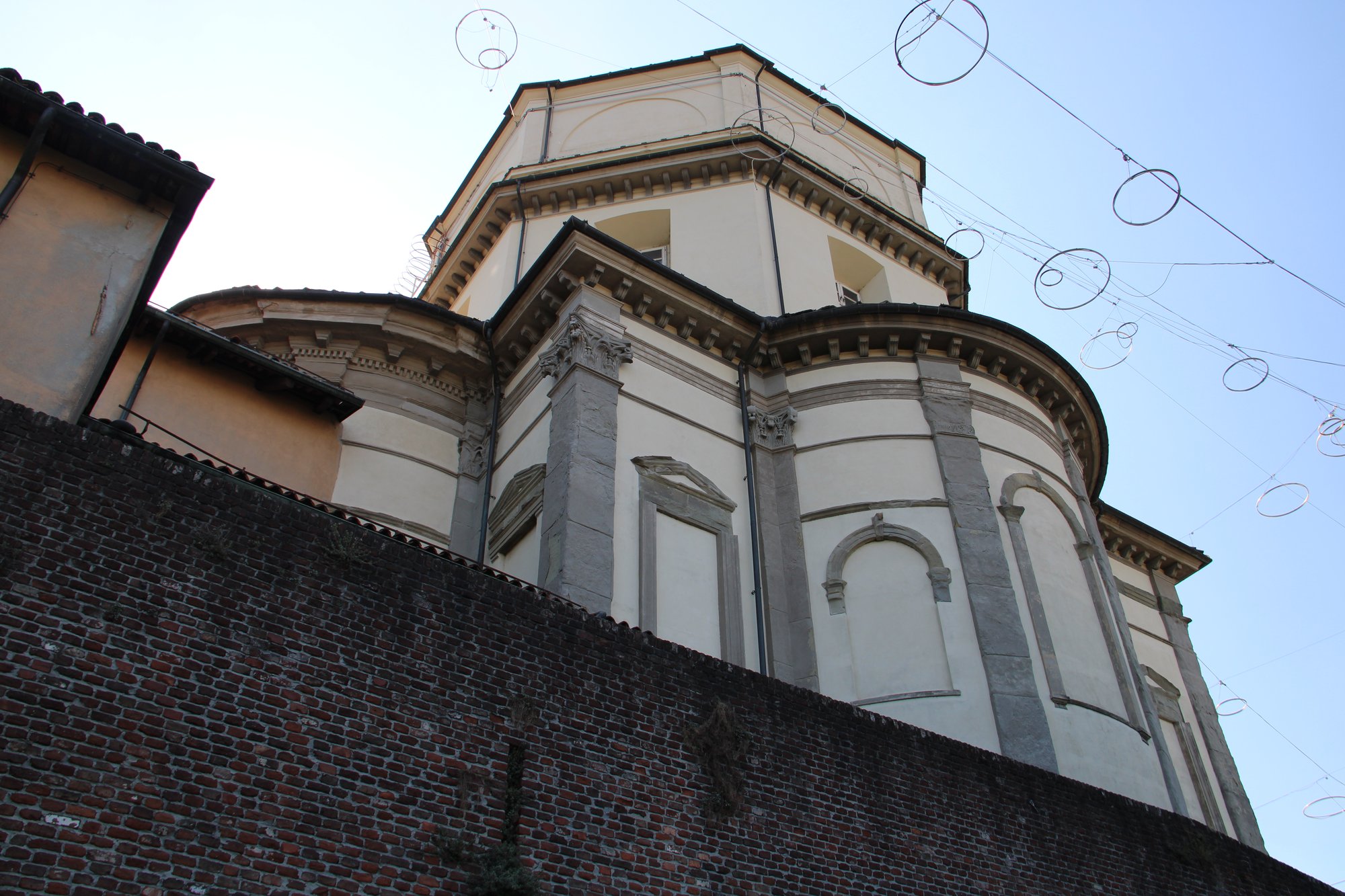
Monte dei Cappuccini
- sacred
- viewpoint
- Price: Free (Mountain Museum €10)
- Opening hours: Church 07:00 - 19:00 daily; Mountain Museum Tue-Sun 10:00 - 18:00
Book a guided tour of Torino
Skip the line and see Torino with a local guide.
History
Capuchin friars chose this wooded bluff above the Po in the late 16th century precisely because it was inconvenient: steep, removed from the city centre, and free of worldly distraction — ideal for a contemplative order built on poverty and isolation. Construction of their church, Santa Maria al Monte, began in 1583 and dragged on for more than seventy years, not finishing until 1656, funded gradually through donations rather than any grand civic commission.
The friars almost certainly never set out to build one of the city's best-loved viewpoints — that was simply an accident of the geography they had chosen for entirely different reasons. As Turin grew up around the base of the hill in the centuries that followed, what had been a deliberately obscure retreat turned into an easy, short climb with sweeping views the friars themselves would have considered beside the point.
Did you know?
The former convent beside the church has housed the National Mountain Museum since 1942, making it one of the oldest institutions in the world dedicated to mountaineering — fittingly, in a city that sits in the shadow of the Alps. Its collection ranges from historic climbing gear and expedition photography to displays devoted to Prince Luigi Amedeo, Duke of the Abruzzi, whose expeditions to K2, the Ruwenzori range and the Arctic in the early 1900s made him one of the era's most celebrated explorers.
Many first-time visitors are surprised to find that the view from Monte dei Cappuccini rivals — some locals would say beats — the more famous panorama from the Mole Antonelliana, framing the Mole itself, the Baroque rooftops of the historic centre and, on the clearest winter days, an unbroken wall of Alpine peaks, all while drawing a fraction of the crowds.
Good to know
The church is free to enter and open daily, while the National Mountain Museum charges a separate ticket and keeps shorter hours, closed on Mondays — worth checking before you go if the museum, not just the terrace, is the priority. A steep but short footpath climbs directly from Borgo Po on the river's east bank, taking most walkers ten to fifteen minutes; a longer paved road makes the same climb more gently for anyone who'd rather skip the stairs.
Clear winter mornings, after a cold front has swept the sky clean, tend to give the best visibility of the Alps from the terrace, while sunset draws the most photographers for views back over the city. The hill combines naturally with a walk along the Po's riverside paths or a stop at the Gran Madre church at the base of the slope.